The Berlin Airlift
All Those Servicemen Involved in the aitlift between June 1948 and September 1949
Will Be Remembered at a wreath laying service at the Spitfire Gardens, Roundham Head
on Wednesday 30th September 2026 At 1045
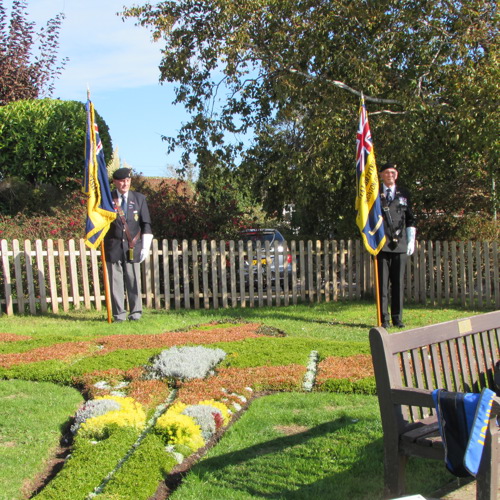
Everyone is welcome to join us to remember the service and sacrifice
of those military and civilian personnel who kept West Berlin free from Soviet domination
between June 1948 and September 1949
Why the Berlin Airlift was Necessary
At the end of the Second World War Germany was divided into
Soviet, American, British and French zones of occupation.
The city of Berlin, though technically part of the Soviet zone, was also split,
with the Soviets taking the eastern part of the city.
On 24th June 1948, the Soviet authorities announced that the highway connecting Western Germany to Berlin would be closed indefinitely “for repairs.”
Then, they halted all road traffic from West to East, and barred
all barge and rail traffic from entering West Berlin. The blockade of Berlin had begun.
As far as the Western Allies were concerned, withdrawal from the city was not an option.
Finding another way to re-provision the city seemed to the Allies to be the only reasonable response.
It was quickly settled. The Allies would supply their sectors of Berlin from the air.
Allied cargo planes would use open air corridors over the Soviet occupation zone to deliver food, fuel and other goods to the people who lived in the western part of the city.
This project became known as the “Berlin Airlift.”
(West Berliners called it the “Air Bridge.”)
For more than a year, hundreds of American, British and French cargo planes ferried provisions from
Western Europe to three airfields in West Berlin.
At the beginning of the operation, the planes delivered about 5,000 tons of supplies every day.
By the end, those loads had increased to about 8,000 tons of supplies per day.
In total the Allies carried about 2.3 million tons of cargo over the course of the Air Lift.
The last plane landed in Berlin on 30th September 1949 bringing the Air Lift to a close.
At the height of the Air Lift, one plane reached West Berlin every thirty seconds.
39 British, 31 American and 13 German civilians lost their lives in the Berlin Airlift.
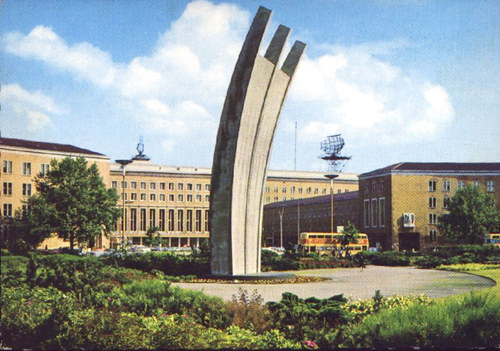
They are remembered on the Berlin Airlift monument at Tempelhof Airport.